One of the most pleasing stories I've read lately was of the Frieder brothers. They were Jewish-Americans who ran a cigar factory up till the outbreak of World War II. They managed to arrange for the migration of about 1400 fellow Jews from Nazi-controlled Germany and Austria. This is a familiar story and theme.
I admit to growing up not thinking highly of my homeland’s own story. I could attribute it to a number of reasons. For example, I believe it would have been difficult for even the most dedicated and motivated teachers to substitute pride and accomplishment for the fear and discontent of the early 1980s . There was the material we had to learn from, books printed on recycled paper, filled with mostly dry and completely un-dramatic text. Pictures were seldom available.
Against a backdrop of slick, lavishly illustrated encyclopedias and magazines featuring America, Europe, Japan, and others, the stories of my country seem to easily fade into a drab and monochromatic echo of sorrow and loss.
I like to think that I did manage to avoid the sense of hopelessness and self-loathing that seems to come too easily when my country’s own history is concerned. The things that help are stories like that of the Frieder brothers.
The Frieder factory was in Manila, and the migration was with the knowledge and consent of the President, Manuel Quezon.
A whole lot has been written about the motives and roles of the players of that story. Certainly, the focus changes with each of the different accounts.
What remains constant is that at one point in our history, we performed an act for no real gain. We performed an act for a group not of our race or religion because, among others, such things didn’t really matter to us.
This was a time when the wealthier countries, the United States included, refused such acts, simply because those things did matter.
I would have liked knowing these things when I was younger.
But I am glad to know of these things now. I am glad to know now of our stories, filled with independence, maturity, and unique generosity.
Tuesday, March 15, 2005


Saturday, March 12, 2005
Scents
I spent an hour in my Singapore hotel room trying to figure out where to go. It was my first time there, and I only had a day. The only information I had were from the brochures and maps I picked up at Changi airport.
One of the brochures had a quote from Rudyard Kipling on "The first condition of understanding a foreign country is to smell it."
I found that to be an odd quote, because no scent stood out from the airport to my hotel room.
Anyway, the brochures I picked up seemed to focus on three areas, shopping, restaurant and bar locations, and man-made parks. But I was going to be there for only a day, and I was looking for a uniquely Singaporean experience. I feel that malls and bars aren't the places for that experience.
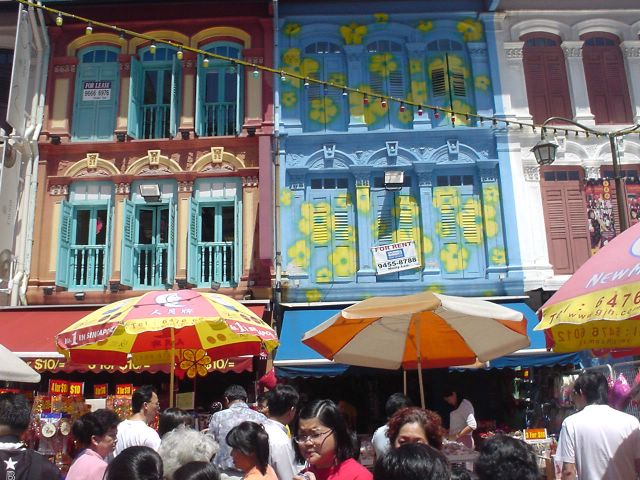
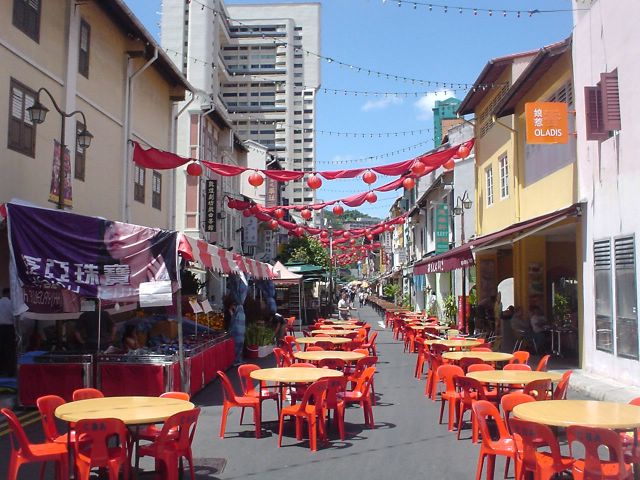
I settled on going to Chinatown and eating at one of the areas featured in the guide book. There were a couple of spots on the map marked as places of interest, so I was looking forward to seeing a few things right after eating.
Sure enough, the place was teeming with locals. Well, with Chinese, anyway. I thought that boded well.
I queued up at a busy stall and got myself something popular, sliced fish with noodles. Simple, but certainly hot, fresh, and fairly filling fare. I washed that down with a local specialty tea and milk cocktail, teh tarik. It was wonderfully refreshing.
While eating, I spotted one of the places of interest marked on my guide map. It was a building right across the street, with a sign that read Urban Development Authority.
I found, to my interest, that there was a small museum. To my disappointment, it was closed.
Oh well, there was another place of interest close by, only a block away. I walked for ten minutes to only find that the only thing of interest was a complex of restaurants and bars.
I gave up at that point.
I just hopped back on the train and met up with a friend and his family. I spent the rest of the afternoon up to the early evening hanging out at their place. That I truly enjoyed.
I spent less than twenty-four hours there, but I can't help coming to the conclusion that the only truly interesting thing there may be the people. I didn't get to converse to any while I was there, so I'm just guessing.
These were the people who were tossed out of the Malaysian Federation. These people, the Singaporeans, managed to make quite a living for themselves. In their own little island with no resources but a harbor and willing people, they built one of the wealthiest economies in the region, both in terms of national product and per person.
The spirit behind that was probably dirty, sweaty, and smelly. The spirit behind that deserves a memorial other than the antiseptic Orchard Road corner Patterson.
One of the brochures had a quote from Rudyard Kipling on "The first condition of understanding a foreign country is to smell it."
I found that to be an odd quote, because no scent stood out from the airport to my hotel room.
Anyway, the brochures I picked up seemed to focus on three areas, shopping, restaurant and bar locations, and man-made parks. But I was going to be there for only a day, and I was looking for a uniquely Singaporean experience. I feel that malls and bars aren't the places for that experience.
I settled on going to Chinatown and eating at one of the areas featured in the guide book. There were a couple of spots on the map marked as places of interest, so I was looking forward to seeing a few things right after eating.
Sure enough, the place was teeming with locals. Well, with Chinese, anyway. I thought that boded well.
I queued up at a busy stall and got myself something popular, sliced fish with noodles. Simple, but certainly hot, fresh, and fairly filling fare. I washed that down with a local specialty tea and milk cocktail, teh tarik. It was wonderfully refreshing.
While eating, I spotted one of the places of interest marked on my guide map. It was a building right across the street, with a sign that read Urban Development Authority.
I found, to my interest, that there was a small museum. To my disappointment, it was closed.
Oh well, there was another place of interest close by, only a block away. I walked for ten minutes to only find that the only thing of interest was a complex of restaurants and bars.
I gave up at that point.
I just hopped back on the train and met up with a friend and his family. I spent the rest of the afternoon up to the early evening hanging out at their place. That I truly enjoyed.
I spent less than twenty-four hours there, but I can't help coming to the conclusion that the only truly interesting thing there may be the people. I didn't get to converse to any while I was there, so I'm just guessing.
These were the people who were tossed out of the Malaysian Federation. These people, the Singaporeans, managed to make quite a living for themselves. In their own little island with no resources but a harbor and willing people, they built one of the wealthiest economies in the region, both in terms of national product and per person.
The spirit behind that was probably dirty, sweaty, and smelly. The spirit behind that deserves a memorial other than the antiseptic Orchard Road corner Patterson.
Thursday, February 10, 2005
Love Is All Around
The reactions from people who hear it for the first time range from morbid curiosity to outright disgust. The stories start out with teller asking questions like "You mean no one's told you what they do? You really have no idea?"
I'm talking about the Korban, the ceremony performed during the holiest of Islamic holidays, the Eid'l Adha or Hari Raya Haj.
The ritual involves an animal, traditionally a sheep, but goats and cows are fine. A few guys hold the animal steady. Another guy goes up to it, gives it a drink of water, and then slits its throat.
This is the point where the storyteller would get reactions like "Really?", "Wow!", "Sick!" And the narration would go on because, as the teller might say, "Wait, there's more."
The scope of this ritual can be quite amazing. This ritual isn't just one animal sacrificed in a mosque for all the attending worshipers. Each fellow, or each family, as much as possible, should perform the ritual. In predominantly Muslim communities, in the days prior to the holiday, it wouldn't be unusual to find virtually herds of goats tied or penned around apartment buildings or houses. Communities with more stringent regulations on storing livestock, such as Singapore, import the animals just in time for the holiday instead.
On the day of the ritual itself, in the right neighborhood, you could see the streets darkened and dimmed with blood. Butchers would be going around, cutting up the freshly-slain carcasses. The skins are hung up on lines or walls to dry.
“Barbarians.”
Not an uncommon reaction, one might imagine. What holy festival must be celebrated with such evident and widespread death? What enlightenment can be found here?
The story can stop at this point. The deepest reactions have been drawn out from the audience. What else does one need to know about such a religion?
What needs to be known is that the ritual is to commemorate a story of self-sacrifice.
“Really? Sounds like that story of Abraham about to sacrifice his son.” This is what the ritual is all about.
The flesh from the animal is to be given away to the needy. The butchers go around and neatly and properly apportion the meat.
In places where Islam is less dominant, such as the US, an acceptable practice is to go to a slaughterhouse and buy some fresh meat. That gets to be given away as well.
Even with these details, it may not be easy to get past the gore. The blood can leave too black a mark. But perhaps that is the intention. Such stark portrayal of sacrificing a part of ourselves for something greater, and to give a part of ourselves to those who need it, is not meant to be forgotten.
I'm talking about the Korban, the ceremony performed during the holiest of Islamic holidays, the Eid'l Adha or Hari Raya Haj.
The ritual involves an animal, traditionally a sheep, but goats and cows are fine. A few guys hold the animal steady. Another guy goes up to it, gives it a drink of water, and then slits its throat.
This is the point where the storyteller would get reactions like "Really?", "Wow!", "Sick!" And the narration would go on because, as the teller might say, "Wait, there's more."
The scope of this ritual can be quite amazing. This ritual isn't just one animal sacrificed in a mosque for all the attending worshipers. Each fellow, or each family, as much as possible, should perform the ritual. In predominantly Muslim communities, in the days prior to the holiday, it wouldn't be unusual to find virtually herds of goats tied or penned around apartment buildings or houses. Communities with more stringent regulations on storing livestock, such as Singapore, import the animals just in time for the holiday instead.
On the day of the ritual itself, in the right neighborhood, you could see the streets darkened and dimmed with blood. Butchers would be going around, cutting up the freshly-slain carcasses. The skins are hung up on lines or walls to dry.
“Barbarians.”
Not an uncommon reaction, one might imagine. What holy festival must be celebrated with such evident and widespread death? What enlightenment can be found here?
The story can stop at this point. The deepest reactions have been drawn out from the audience. What else does one need to know about such a religion?
What needs to be known is that the ritual is to commemorate a story of self-sacrifice.
“Really? Sounds like that story of Abraham about to sacrifice his son.” This is what the ritual is all about.
The flesh from the animal is to be given away to the needy. The butchers go around and neatly and properly apportion the meat.
In places where Islam is less dominant, such as the US, an acceptable practice is to go to a slaughterhouse and buy some fresh meat. That gets to be given away as well.
Even with these details, it may not be easy to get past the gore. The blood can leave too black a mark. But perhaps that is the intention. Such stark portrayal of sacrificing a part of ourselves for something greater, and to give a part of ourselves to those who need it, is not meant to be forgotten.
Saturday, January 15, 2005
Our Food
When talking with people from other countries, I've noticed that one thing consistent was that they've not come across a Filipino restaurant, or if they have, it was one patronized only by Filipinos, and they've only eaten there because a Filipino invited them over.
This is a contrast to the Philippines, which has popular American, Chinese, Japanese, Korean, Thai, and Persian restaurant chains. There are even more nations represented by specialty establishments. I've come to the conclusion that eating something new is higher on the Pinoy priority list than sharing with others the things we eat.
If I were to open a restaurant in another country, or have a stranger try out food that I think is quite Filipino, these are my choices.
Appetizers
Chicharon – We can go with the wonderfully meaty chicharon Cebu, or chicharon bituka or bulaklak, which impart such a unique texture to the palate
Sisig - Crunchy and succulent all at once
Kinilaw - With an island country, take your pick from tanigue, swordfish, tuna, or even sea urchin. You can even toss in bits of kambing or inihaw na baboy.
Mushrooms, lited, or squid a la pobre - The garlic-laden gravy hissing and steaming on a hot plate
Entrés
Adobo - Regular or tostado. For places with sensitivities to pork, e.g. Jakarta, Rhiyad, etc., kambing is a more than capable alternative for baboy
Caldereta - Lean chunks of beef or goat stewed to tender perfection in a rich sauce filled with chorizo de Bilbao, potatos, and bell peppers
Nilaga or bulalo – Our esteemed food critic Jet may not favor consommés or the like, but there is more than a bit of charm to the beef's subtle flavor, peppered, with a hint of onion and ginger
Tinola - Even more delicious with a native chicken
Bangus, squid, or tilapia - Charcoal-grilled and stuffed with chopped onions, tomatos, and ginger
Sinigang - The sour sampaloc is such an amazing complement to fresh bangus, hipon, or baboy
Kare-kare – I don’t really like bagoong myself, so I can’t properly appreciate this dish, but with its tasty peanut sauce and chunks of beef and lamang loob, I just can’t leave it off the list.
Vegetables
Pinakbet
Monggo guisado with bits of tinapa
Laing
Side dishes
Taba ng talangka
Enseladang mangga
Itlog na maalat with kamatis
Dessert
Puto bungbong
Bibingka
Buko pandan
Panyo-panyo pastries from Bacolod
Leche flan and halo-halo are fine, but they aren’t particularly unique.
Alcoholic beverages
San Miguel - Pale Pilsen, Light, Cerveza Negra. If only they still made Premium.
Tanduay - Superior or the recently introduced Premium
I'm sure there are a lot of local liquors out there that can be recommended, the drinks in clay jars that stay in the earth and are only dug up on special occassions, but I haven't been fortunate enough to try any.
I have tried good lambanog, but it just lacks the refinement for more formal social gatherings.
This is a contrast to the Philippines, which has popular American, Chinese, Japanese, Korean, Thai, and Persian restaurant chains. There are even more nations represented by specialty establishments. I've come to the conclusion that eating something new is higher on the Pinoy priority list than sharing with others the things we eat.
If I were to open a restaurant in another country, or have a stranger try out food that I think is quite Filipino, these are my choices.
Appetizers
Chicharon – We can go with the wonderfully meaty chicharon Cebu, or chicharon bituka or bulaklak, which impart such a unique texture to the palate
Sisig - Crunchy and succulent all at once
Kinilaw - With an island country, take your pick from tanigue, swordfish, tuna, or even sea urchin. You can even toss in bits of kambing or inihaw na baboy.
Mushrooms, lited, or squid a la pobre - The garlic-laden gravy hissing and steaming on a hot plate
Entrés
Adobo - Regular or tostado. For places with sensitivities to pork, e.g. Jakarta, Rhiyad, etc., kambing is a more than capable alternative for baboy
Caldereta - Lean chunks of beef or goat stewed to tender perfection in a rich sauce filled with chorizo de Bilbao, potatos, and bell peppers
Nilaga or bulalo – Our esteemed food critic Jet may not favor consommés or the like, but there is more than a bit of charm to the beef's subtle flavor, peppered, with a hint of onion and ginger
Tinola - Even more delicious with a native chicken
Bangus, squid, or tilapia - Charcoal-grilled and stuffed with chopped onions, tomatos, and ginger
Sinigang - The sour sampaloc is such an amazing complement to fresh bangus, hipon, or baboy
Kare-kare – I don’t really like bagoong myself, so I can’t properly appreciate this dish, but with its tasty peanut sauce and chunks of beef and lamang loob, I just can’t leave it off the list.
Vegetables
Pinakbet
Monggo guisado with bits of tinapa
Laing
Side dishes
Taba ng talangka
Enseladang mangga
Itlog na maalat with kamatis
Dessert
Puto bungbong
Bibingka
Buko pandan
Panyo-panyo pastries from Bacolod
Leche flan and halo-halo are fine, but they aren’t particularly unique.
Alcoholic beverages
San Miguel - Pale Pilsen, Light, Cerveza Negra. If only they still made Premium.
Tanduay - Superior or the recently introduced Premium
I'm sure there are a lot of local liquors out there that can be recommended, the drinks in clay jars that stay in the earth and are only dug up on special occassions, but I haven't been fortunate enough to try any.
I have tried good lambanog, but it just lacks the refinement for more formal social gatherings.
Tuesday, January 04, 2005
Grounded
The subject came up on our first week in Jakarta. "You know," my colleague said, "I just haven't gotten a sense of the local beauty."
He was an American of Egyptian descent. He spent almost all of his professional life in the Middle East. North America, the Middle East, Western Europe, this guy has been around and has seen all sorts of attractive women.
And now, Southeast Asia.
My own travels are nowhere near as extensive. But because of where I grew up and the few foreign countries that I have seen, I like to think that I too have had the pleasure of seeing different kinds of pretty girls, in different places.
Before I left Manila, I was told not to expect much in the way of good-looking females. Even female friends who had been to Jakarta said that. The few beauties that were there were reportedly hidden away like precious valuables.
After three days in country, I was starting to think that they were all right. That I shouldn't expect and the ones worth seeing were well and truly kept out of sight.
Then the subject came up. Apparently, I wasn't the only one getting concerned.
We've both recently been to Bangkok, so that's where we got to start talking. We both agreed that the Thai capital was a virtual confectionary for the eye-candy connoisseur
While comparing, he said that it looks like Indonesian women seem to have more personality. We both paused and looked at each other for a bit. "We've been here too long."
I said that we should plan a trip together to Bangkok, just for a weekend. We may need a refresher on how pretty girls are supposed to look like.
The locals don’t have any problem becoming attracted to one another, I imagine. There are over 200 million of them.
I guess people in this place were not meant for us to look or leer at. Good for them, maybe.
And perhaps it’ll turn out to be good for us as well. At the very least, it’s another thing to look forward to when going back home.
He was an American of Egyptian descent. He spent almost all of his professional life in the Middle East. North America, the Middle East, Western Europe, this guy has been around and has seen all sorts of attractive women.
And now, Southeast Asia.
My own travels are nowhere near as extensive. But because of where I grew up and the few foreign countries that I have seen, I like to think that I too have had the pleasure of seeing different kinds of pretty girls, in different places.
Before I left Manila, I was told not to expect much in the way of good-looking females. Even female friends who had been to Jakarta said that. The few beauties that were there were reportedly hidden away like precious valuables.
After three days in country, I was starting to think that they were all right. That I shouldn't expect and the ones worth seeing were well and truly kept out of sight.
Then the subject came up. Apparently, I wasn't the only one getting concerned.
We've both recently been to Bangkok, so that's where we got to start talking. We both agreed that the Thai capital was a virtual confectionary for the eye-candy connoisseur
While comparing, he said that it looks like Indonesian women seem to have more personality. We both paused and looked at each other for a bit. "We've been here too long."
I said that we should plan a trip together to Bangkok, just for a weekend. We may need a refresher on how pretty girls are supposed to look like.
The locals don’t have any problem becoming attracted to one another, I imagine. There are over 200 million of them.
I guess people in this place were not meant for us to look or leer at. Good for them, maybe.
And perhaps it’ll turn out to be good for us as well. At the very least, it’s another thing to look forward to when going back home.
Sunday, December 12, 2004
What Filipinos Do
I have a friend who's been in Singapore for over four years now. He met his wife there. They now have a son.
He thinks of coming back to the Philippines. No mystery about that, I suppose. He left family and friends. He left home.
But he still is in Singapore with his wife and son.
I find his situation personally relevant because I just recently opted to take a job overseas. At best, I’d have several weeks out of Manila at a time, then one or two weeks in. If I have to stay in the country where I’m employed for an extended period, then I just plan to do this for a couple of years. Then return home.
I’m sure he had similar plans.
"The longer I stay away, the more it makes sense not to come back. It's what Filipinos do."
"It seems so sensible to stay, especially when you see another country making the most of what it has, as compared to ours, which seems to waste most of everything."
"Most people either just look after their own, to hell with everyone else, or just leave."
These are the things he said to me when we last talked.
I didn't disagree. I have in my own mind the country that I want for myself and my family. I’m sure my friend does as well. I’m sure our wishes are quite common, efficient government, security and safety, and gainful employment. Many countries would call these rights. And in many countries other than ours, you can expect that these will be accorded to you.
I suppose that it’s easy to assume that not enough people have the same desire for such a country. It seems that that more than enough see it as a place where you just look out for yourself.
My only reply to my friend was that we have to earn our country. I see this as the only logical and practical way of looking at this.
If one wants something, then only way to get it is to work for it. It was a concept that he readily understood. After all, he went to Singapore to be able to pursue the things that he wanted.
It occurred to me then that a desire for a better country is not the same as a desire for a better Philippines.
I myself want a better Philippines. I’d like to think that I could and would work for it.
I can't imagine that it will be given to me as a gift. Even if it were given, without the experience of building it, we would not have the skills to maintain and protect it. To paraphrase a quote from a president and from a poet, we'll never get to run it like heaven without the memory of running it like hell.
Too many already choose not to do it. So many just leave or just look out for themselves.
I can't do it by myself and I don’t expect to. There are many others who do want a better Philippines. I’ve met and know more than a few.
So I just plan to do my own time abroad and make some cash. Then return to make my life and my home in the land where I was born.
He thinks of coming back to the Philippines. No mystery about that, I suppose. He left family and friends. He left home.
But he still is in Singapore with his wife and son.
I find his situation personally relevant because I just recently opted to take a job overseas. At best, I’d have several weeks out of Manila at a time, then one or two weeks in. If I have to stay in the country where I’m employed for an extended period, then I just plan to do this for a couple of years. Then return home.
I’m sure he had similar plans.
"The longer I stay away, the more it makes sense not to come back. It's what Filipinos do."
"It seems so sensible to stay, especially when you see another country making the most of what it has, as compared to ours, which seems to waste most of everything."
"Most people either just look after their own, to hell with everyone else, or just leave."
These are the things he said to me when we last talked.
I didn't disagree. I have in my own mind the country that I want for myself and my family. I’m sure my friend does as well. I’m sure our wishes are quite common, efficient government, security and safety, and gainful employment. Many countries would call these rights. And in many countries other than ours, you can expect that these will be accorded to you.
I suppose that it’s easy to assume that not enough people have the same desire for such a country. It seems that that more than enough see it as a place where you just look out for yourself.
My only reply to my friend was that we have to earn our country. I see this as the only logical and practical way of looking at this.
If one wants something, then only way to get it is to work for it. It was a concept that he readily understood. After all, he went to Singapore to be able to pursue the things that he wanted.
It occurred to me then that a desire for a better country is not the same as a desire for a better Philippines.
I myself want a better Philippines. I’d like to think that I could and would work for it.
I can't imagine that it will be given to me as a gift. Even if it were given, without the experience of building it, we would not have the skills to maintain and protect it. To paraphrase a quote from a president and from a poet, we'll never get to run it like heaven without the memory of running it like hell.
Too many already choose not to do it. So many just leave or just look out for themselves.
I can't do it by myself and I don’t expect to. There are many others who do want a better Philippines. I’ve met and know more than a few.
So I just plan to do my own time abroad and make some cash. Then return to make my life and my home in the land where I was born.
Saturday, August 21, 2004
Terminal
I’m in the airport waiting to board my plane to Bangkok. I was just trying to doze off then I found myself being kept awake by an American seated behind me, having a conversation with someone next to him.
He said that he was on his way to Bangkok, that he took a trip every year. He wanted to go to Manila but was advised against it due to security concerns. Then he mentioned that everyone hates Americans, that he doesn’t understand it. He says he’s a nice guy, doesn’t hate anything himself. He’s a teacher who just takes a big trip every year.
It occured to me that the people who hated them probably didn’t have much to love in life. I suppose if you don’t have much to have or love yourself, then it would be easy to hate those who do.
Americans.
I remembered the Burnhams who were kidnapped by the Abu Sayaff three years ago. They were missionaries who were trying to provide for Filipinos what the Philippines itself could not, some education, probably some respect and attention. Then they were the ones kidnapped and killed, made into symbols of hatred against Americans.
I don’t know of any other nation that sends missionaries here so much as the US. I’m not sure whether that’s because we were a former colony or whether as a country, the US is the one with the most people willing to go out and help out where they’re needed. If the second were true, that would be the greatest irony that I can see. The seemingly most hated nation is the one who’s own people cares for others the most. And the caring is shown in its most basic and personal form. They’ll leave their own country to go to yours.
After a while, I found myself getting surrounded by more and more Americans. They’re missionaries on their way to Thailand and Laos. It seems that they’re off on some outreach program to visit schools and orphanages. When their whole group got together, they sat around and started to recite verses and prayed.
These are the people killed in the name of God.
He said that he was on his way to Bangkok, that he took a trip every year. He wanted to go to Manila but was advised against it due to security concerns. Then he mentioned that everyone hates Americans, that he doesn’t understand it. He says he’s a nice guy, doesn’t hate anything himself. He’s a teacher who just takes a big trip every year.
It occured to me that the people who hated them probably didn’t have much to love in life. I suppose if you don’t have much to have or love yourself, then it would be easy to hate those who do.
Americans.
I remembered the Burnhams who were kidnapped by the Abu Sayaff three years ago. They were missionaries who were trying to provide for Filipinos what the Philippines itself could not, some education, probably some respect and attention. Then they were the ones kidnapped and killed, made into symbols of hatred against Americans.
I don’t know of any other nation that sends missionaries here so much as the US. I’m not sure whether that’s because we were a former colony or whether as a country, the US is the one with the most people willing to go out and help out where they’re needed. If the second were true, that would be the greatest irony that I can see. The seemingly most hated nation is the one who’s own people cares for others the most. And the caring is shown in its most basic and personal form. They’ll leave their own country to go to yours.
After a while, I found myself getting surrounded by more and more Americans. They’re missionaries on their way to Thailand and Laos. It seems that they’re off on some outreach program to visit schools and orphanages. When their whole group got together, they sat around and started to recite verses and prayed.
These are the people killed in the name of God.
Saturday, July 24, 2004
First Day
Today was my first full Saturday in my apartment. No going home to my family's place. Just spent the day in my own.
It's been a few years since I lived away from home, mainly due to job assignments. This is the first time I've done it not because of work, but just because I could.
I thought that all I'd do at my family's place would be to lay in bed, read, or watch TV.
And I could do all that in my apartment.
That did get to me, the thought that it's not where you are, but what you do. Or what you don't.
It's been a few years since I lived away from home, mainly due to job assignments. This is the first time I've done it not because of work, but just because I could.
I thought that all I'd do at my family's place would be to lay in bed, read, or watch TV.
And I could do all that in my apartment.
That did get to me, the thought that it's not where you are, but what you do. Or what you don't.
Subscribe to:
Posts (Atom)